
I talk all the time about how you need to run your house like a business. Using that same mindset, you need to run your kitchen like a restaurant would. I’ll break this into 7 sections.
Inventory
This is the most important component to your kitchen. Just like a restaurant manager knows exactly what they have on their shelves and in their fridge, so do you. Keep this on paper, use an app, just keep it mentally. I, personally, just keep mine mentally. I tell you all the time, if you don’t overstock it will be really easy for you to remember or even see what you have in your “restaurant”. You don’t want to waste money on spoiled foods so you’re going to properly prep your food and you’re going to rotate your food. This means you follow “first in, first out”. This means whatever was purchased first needs used up first. This goes for anything that is perishable, so basically everything in your kitchen.
Food Prep
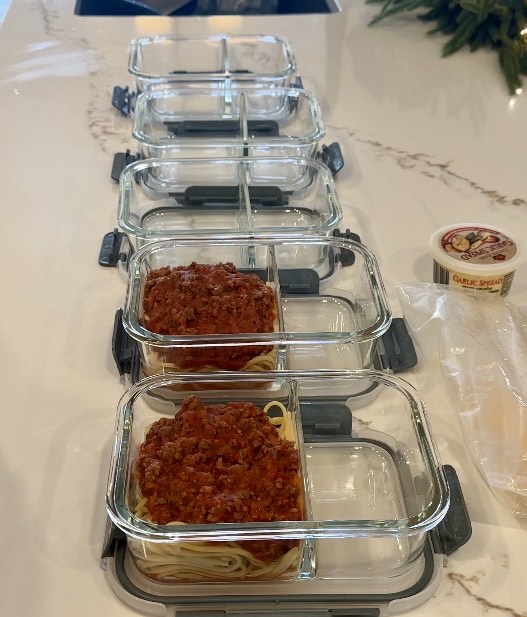
This can be really challenging for houses because it’s so time consuming. But it is absolutely necessary. When you do your grocery shopping, you will bring your food home and immediately prep it. Why am I saying “immediately”? Because if we don’t do it right away, we NEVER will. And that’s how spoilage happens. If we can procrastinate, we will procrastinate. Food prep consists of washing produce, properly cutting up your chicken, cooking whatever proteins you can, assembling your lunches for the week, on and on.
Meal Planning
Just like how a restaurant has a menu, so do you. You’re going to meal plan for the week, BUT you’re not going to meal plan based on what looks good. You’re going to meal plan based on your stock. Similar to how a restaurant would decide their specials based on what they already have. So, whatever ingredients you already have, you’re going to try to make meals based on those ingredients. Just type into Google the ingredients you have with the word “recipes” and you’ll get some ideas. This is how you save money on groceries. It’s also how you avoid ending up with an overabundance of inventory.
Groceries
Real quick, let’s talk about your grocery budget. You’re going to grocery shop in a very specific way in order to save money. It’s going to go essentials, ingredients, extras. Okay. So we’re going to start with your essentials, things you can’t live without. It’ll be different for every house. My house would be like toilet paper, detergent, milk, etc. Here is my list of staples, if you’d like to check that out. https://organizedchaos4bus.com/2023/03/02/grocery-and-meal-prep/
Your house will be different, but you do want to identify what your household staples would be. It’s just like a restaurant. They all have certain things they buy every week, their staples. After you’ve added all your essentials, then you’re going to move onto ingredients for meals. Once you’ve done that, with whatever is left over, add the non-essentials like snacks and things. If you grocery shop using that method, you will save money. I promise you. I recommend doing this on an app. You can use a piece of paper if you want. I just use the Walmart app because it’s the most convenient for me. As I’m adding stuff to my cart I’ve got running total of where I’m at, so I don’t overspend. If I do go over my budget, then at the end I can add or delete things to get back to my golden number. Using an app also helps eliminate impulse purchasing because you’re not in the store looking at products.
Zones
Your kitchen should have invisible zones. There should be a prepping station, a cooking station. Now these zones might be set up by you, but they might also just be organically formed. For instance, your cooking station is obviously going to be where the stove is located but utilizing zones your controlling your mess. Now I’ve had people say, “I don’t have space in my kitchen for zones.” That’s totally okay. Your prepping station can also be your cooking station. Just do all your prepping, clean up the space and then begin the cooking.
Leftovers
Leftovers are the bane of most kitchens’ existences, right? That’s where perfectly cooked food goes to spoil. So in order to make sure you’re using everything, you’re going to employ two methods with your leftovers. Restaging and repurposing. Restaging is what I called trickery, it’s all an illusion. Typically leftovers don’t get eaten because we get desensitized to them. We see that same container of spaghetti every time we open the fridge and it looks so boring and blah. So change it up. Create an illusion of something new. Maybe move foods into a new container, turn them different directions, move them to a different shelf. This works for the pantry and the fridge. You’re just giving it a fresh look. You’re just making it more appealing and appetizing to your customers, which are the people in your house. Now let’s talk repurposing. Maybe you’ve cooked dinner and you’ve got some leftover ingredients or maybe leftovers in general that you can repurpose into a new meal. For instance, you could take that leftover pasta and repurpose it into baked spaghetti. You can turn leftover chicken into tomorrow’s chicken salad. Just get creative.
Closing Shift
Just like how the Night Shift has to get the restaurant ready for the opening shift, it’s the same with your house. Someone is getting the kitchen ready for whoever is opening the house. Now in a restaurant, there would be a checklist. If I were you, I would just use my daily six. That’s the top part of my cleaning schedule. That has everything you need to close your kitchen. It’s super easy. But if you want to be more meticulous, by all means, make yourself a checklist. Stick it on the fridge, wherever. Make sure which ever employee is closing down the kitchen for the night is utilizing that checklist. In our house, we all share responsibilities on the daily six so the person closing the kitchen might be different every night. Here’s a link to the 6/10 List: https://organizedchaos4bus.com/2022/02/10/the-6-10-list/comment-page-1/
But that is it. There is a science to running your house, even your kitchen and by treating your house like a business and running your kitchen like a restaurant it becomes much less daunting and turns into a checklist, very procedural kind of thing.
Is there anything else on this topic of our kitchens that you have questions about or need explained further? Is there anything I missed that you think would be helpful, I love to hear your feedback you guys have the best ideas!
 Organized Chaos