Why Cleaning Isn’t the Same as Decluttering—And Why Mixing Them Up Is Exhausting!
If cleaning actually solved clutter, your home would be peaceful by now. But it isn’t—because cleaning was never the real issue.
Most people aren’t doing the wrong work…they’re just doing the right work in the wrong order. We use words like tidy, clean, declutter, and organize as if they’re interchangeable, but they’re completely different tasks with completely different outcomes. When we mix them up, we stay stuck, overwhelmed, and exhausted.
Let’s break down the four stages of home—and why the order matters.
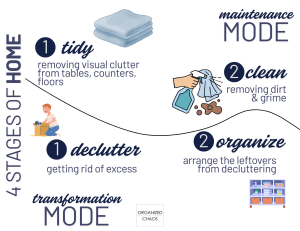
The Four Stages of Home
There are two categories of home care, and each has two steps:
Maintenance Mode
- Tidy → Clean
Transformation Mode
- Declutter → Organize
Most people stay trapped in maintenance mode while hoping for transformation. But maintenance keeps things running; transformation changes how things work.
MAINTENANCE MODE
1. Tidy
Tidying is simply removing visual clutter. It’s putting things back where they already belong:
- Shoes by the door
- Dishes in the sink
- Mail stacked instead of scattered
- Throw pillows fluffed
Tidying:
- Resets a space
- Restores visual calm
- Is quick and repeatable
Tidying makes daily life smoother. But here’s the truth: tidying does not change your home. A tidy home can still be cluttered, chaotic, and hard to manage—it just looks better on the surface.
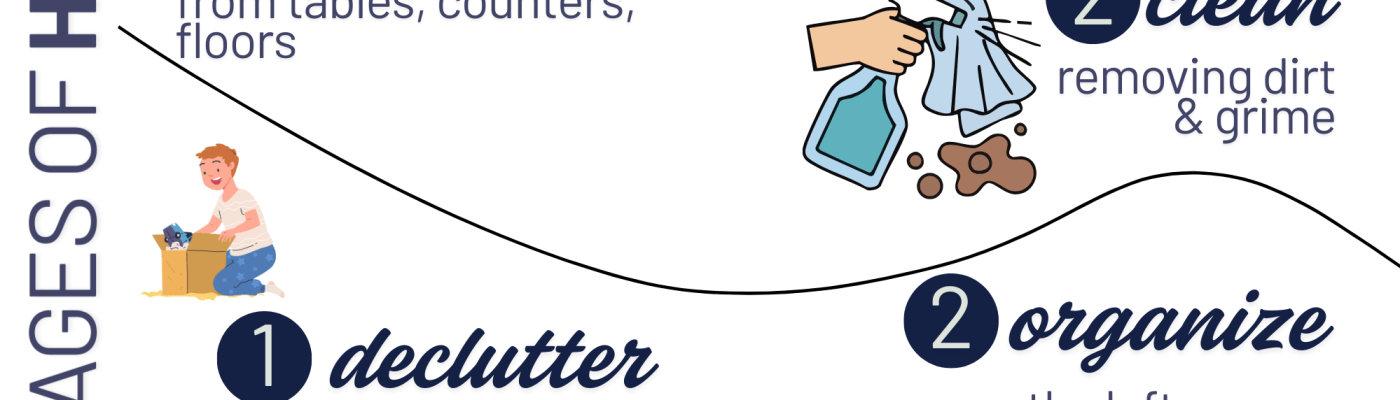
2. Clean
Cleaning removes dirt, grime, and bacteria. It’s vacuuming, mopping, scrubbing, wiping and disinfecting.
Cleaning:
- Protects hygiene and health
- Takes more time and energy
- Requires access—meaning you must tidy first!
You can’t clean around piles. You just end up shuffling them around.
And just like tidying, cleaning doesn’t change your home either. You can clean every week for a decade and still feel stuck. That’s when people start blaming themselves:
- “I must be lazy.”
- “I need a better routine.”
- “I’m just bad at this.”
Maintenance has no finish line. It never ends. That’s why it feels like you’re working constantly with nothing to show for it.
TRANSFORMATION MODE
3. Declutter
Decluttering is decision-making, not cleaning. It’s reducing volume—choosing what stays and letting go of what doesn’t.
Decluttering asks:
- DoI use this?
- Do I love this?
- Am I keeping it out of guilt, fear, or habit?
Decluttering is mentally heavy because it’s emotional work, not physical work. But it permanently reduces the amount of stuff you manage.
4. Organize
Organization always comes after decluttering. Trying to organize before decluttering is the #1 reason people stay stuck.
When you organize clutter, you’re not organizing—you’re reorganizing clutter:
- New bins
- New shelves
- New labels
- Same overwhelming volume
Organization is assigning homes to what remains—not everything you started with.
Organization:
- Groups items by function
- Creates systems that match real life
- Makes things easy to find and easy to put away
And here’s the line to remember:
You cannot organize clutter. You can only contain it.
Bins don’t fix excess. Labels don’t fix too much stuff. Systems collapse when they’re overloaded.
Organization locks in the gains of decluttering.
Why People Get Stuck
Most people are unknowingly doing this:
- Cleaning when they actually need to declutter
- Tidying endlessly without systems
- Buying organizers instead of reducing volume
So they feel like they’re working constantly, but nothing ever changes. That’s because they’re stuck in maintenance mode, hoping it magically becomes transformation. It won’t.
This isn’t a personal failure—it’s a category error.
How to Know Which Mode You Need
If you’re asking:
- Why does this keep coming back?
- Why is this so hard to maintain?
- Why am I always cleaning?
You need decluttering or organizing.
If you’re asking:
- Why does this feel grimy?
- Why does the house feel stale?
- Why am I embarrassed by the mess?
You need tidying or cleaning.
The Bottom Line
A peaceful home doesn’t require doing more—it requires doing the right type of work.
- Maintenance keeps your home functioning.
- Transformation changes how your home feels.
Once you stop expecting one to do the job of the other, everything becomes lighter, easier, and far less overwhelming!
 Organized Chaos