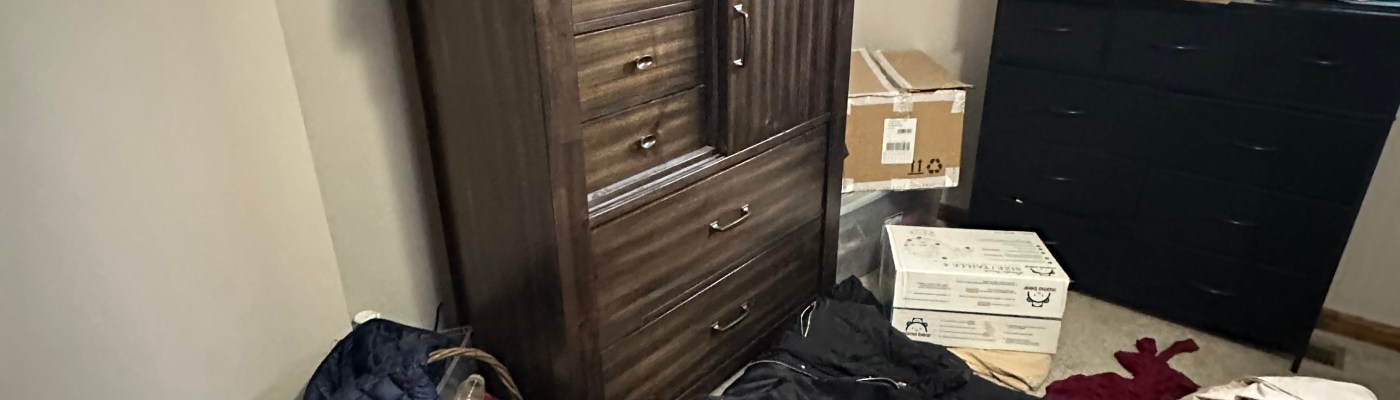
Decluttering isn’t the problem…how we approach it is. So, if you want decluttering to actually work this time, keep reading.
Decluttering feels daunting. There’s so much advice out there, so many methods and rules, that just figuring out how to begin can feel overwhelming in itself. Not to mention, everyone is different and has to find their own special way to declutter. That alone makes you want to give up before you even start! But the good news is that while there are a million different paths you can take when decluttering, they all lead to the same destination: a home with less stuff.
Now, I know what you’re thinking…”Ugh, I’ve done this so many times. My house cannot afford another mess trying to declutter”. And I agree. So instead of pulling everything out and making a bigger mess, I want to show you a way to declutter that fits into real life. It’s called my as-you-go-approach, and it’s all about letting go of things you’re not using as you notice them. No chaos required. AND no motivation required! Because we all struggle to find that in our cluttered minds don’t we? It may feel like you didn’t declutter at all, and that’s not the point. Because decluttering doesn’t have to mean pulling out every single thing you own and getting decision paralysis. There are other ways to get the results we want.
First, let’s rewire our minds a bit. It’s important to go into this with a positive attitude. So, we are leaving negative talk at the door. You are not lazy, you are not broken, you are not messy and you are not bad at decluttering. Our biggest issue is just that we’ve never been taught to live with less and we’ve never been shown how to declutter. And that’s why you have me in your life!
Clutter isn’t just stuff to a person. It’s decisions. It’s guilt. It’s memories. It’s “what if I need this someday?” It’s exhaustion. And when all of that piles up in your brain, it freezes! So we’re not talking about organizing or perfecting. We’re talking about STARTING in a way that tricks your brain into cooperating. This is all about momentum. Momentum beats motivation every time.
I can already tell. You’re reading this thinking “how am I supposed to be able to do this without motivation?” And you’re right, you have to have motivation to do anything in life. You have to be motivated. This decluttering method doesn’t eliminate the need for motivation, it just shrinks how much of it you need! We need motivation for everything we do, but not all actions require the same amount. For example, working out and brushing your teeth both require motivation, just wildly different amounts! Working out takes a truckload of motivation for me. Brushing my teeth, on the other hand, only takes the tiniest pebble. I don’t have to hype myself up. This decluttering approach works the same way. It lowers the motivation requirement so much that even on low-energy days, you can still make progress.
Motivation is unreliable. It comes and goes, and waiting for it turns decluttering into a chore you postpone. Momentum is automatic. Once you start making small, easy decisions, they naturally stack. Each item you remove makes the next decision easier. Momentum beats motivation every time!
And that’s where my favorite method for decluttering comes in. The “As You Go Approach”. This is for people who feel stuck before they even begin. Instead of setting aside time to declutter, you declutter as you live your life. I call it decluttering organically. Decluttering done organically means you’re not forcing change or imposing a system on your life. You’re letting decluttering emerge naturally from how you already live. Instead of pulling everything out, making rules, or following a step-by-step plan, you pay attention as you go. As you move through your day, you notice what you reach for and what you don’t. When something proves it no longer has a purpose, you remove it in that moment. No ceremony. No big decision day. Just like an organic garden, you’re not yanking everything up at once. You’re thinning what isn’t thriving so what is can breathe. Over time, the environment improves.
Here’s how it works:
You grab a basket, a box, a bucket, literally anything. You put it somewhere easy to access, somewhere centralized in your home. Now, as you move through your day if you see something and you think “I don’t use this”, “I don’t like this”, “I forgot I even had this”. You don’t stop and analyze it, you don’t debate, you don’t reorganize. You just drop it in the basket. That’s it. You’re not ‘decluttering’. You’re just noticing. And the magic of this approach is that it bypasses overwhelm. There’s no big decision-making session. No emotional marathon. No “I have to deal with everything right now”. You’re just collecting. And when the basket is full? You donate it! No sorting it back into the house, no second-guessing. It leaves!
What I love about this method is that it works in the background of your life. You don’t even realize you’re decluttering, but the space starts to feel lighter. It’s like compound interest. It’s doing the work for you. After a while, you’ll look around your tidier house and think “when did this even happen?” When you’re overwhelmed, your brain wants certainty and safety. Big projects feel risky. Small actions feel doable. The “as you go” approach: removes the pressure to start; reduces decision fatigue. That’s it. That’s literally the whole method.
Let’s dive into this a little more though so I can give you some tips to help you along your journey.
The first is my phrase I have all of my followers and clients use on their clutter and that magic phrase is, “can I live without it?” We were taught decluttering meant asking “do I need this?” Absolutely not. “Need” is slippery. “Need” can justify keeping anything, from that single missing sock to a box of random cables you’ll “probably use someday”. Normally, when we declutter, the burden is on us, we have to justify why we want to keep something. This creates stress, overthinking, and excuses: “But I might need it someday…”
By asking “can I live without it?” you flip the question. Now, the burden is on the item. It has to prove its value or relevance in your life. If it can’t demonstrate that it deserves to stay, then it’s free to go. You’re no longer wrestling with your own guilt or attachment; you’re just observing what truly matters. In other words, instead of you proving why it belongs, the item has to prove why it stays. It makes decluttering easier, faster, and far less emotionally draining.
Now let’s talk about timers. Sometimes you do want to be intentional and get stuff done, but not to the point of burnout. That is where timers are your best friend. But they have to be short. Not hour-long timers. Not “I’ll work until it’s done”. We’re talking about 5, 10, 15 minutes. Grab a basket, start a 10 minute timer and start chucking items for 10 minutes. When the timer stops, you stop. No guilt. No “just 5 more minutes”. Stopping on time trains your brain to trust the process. The timer works because consistency beats intensity. But, don’t overdo it.
If you’re really feeling stuck and you’re wondering where to start, just ask yourself, “what’s the smallest thing I could do right now?” Maybe that’s tossing one item or working for one minute or making one decision. Progress doesn’t come from dramatic decluttering days, it comes from consistently showing up. Decluttering is draining. And I don’t mean physically. I mean mentally. I mean emotionally. You don’t need to become a different person to have a calmer space. You don’t need discipline or motivation or a perfect plan. You need systems that work with your energy, not against it.
The “as you go” approach lets decluttering happen naturally. Timers protect you from burnout. And small steps build confidence faster than big promises. So start where you are, use what you have, and trust that even the tiniest action is moving you forward. You’re not behind, you’re just beginning. And that’s more than enough!
 Organized Chaos