Decluttering Isn’t Emptying Everything Out!
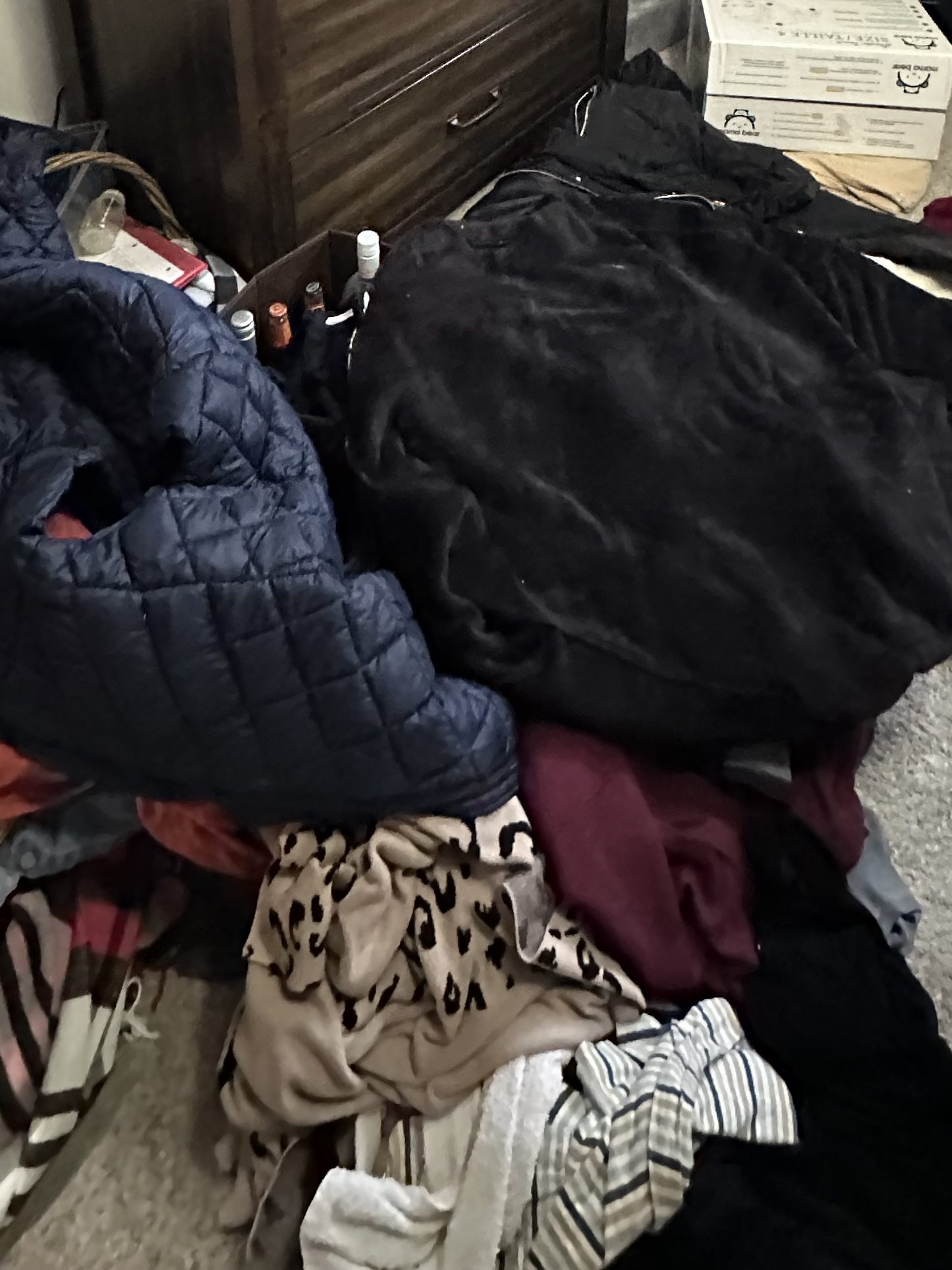
It’s definitely what we think of though. I mean how many television shows have we seen do it this way? Or even on social media? How satisfying is it seeing this huge mess that slowly gets smaller and smaller?
- Decluttering Isn’t Emptying Everything Out!
- So how should we do it?
- Can I Live Without It?
- But What IF…?
- SUM Method
- SUM Criteria:
- Steps of Decluttering
- Don’t Focus on Being “Done”
- Decluttering Is Never Complete
So how should we do it?
Well, I’m glad you asked. I’m going to give you a beginners guide to decluttering. What I teach is sustainable, it’s timeless. It doesn’t change. How I teach you is how I learned. So, at times, some things may sound repetitive. That’s what you want. The more you hear it, the more likely it is to stick!
Can I Live Without It?
My magic question that I have all of my followers and clients use on their clutter. “Can I live without it?” We were all taught decluttering meant asking “do I need this?” NO, absolutely not. Need gets your brain stuck in this cycle. “What if, this?” or “What if, that?” Because you already own it, you’ve spent money on it, it’s in your home…your brain overvalues it. To avoid the “pain” of the mistake of getting rid of it, your brain chooses what’s safest, which is to keep it. Thus, you continue in this cycle.
But What IF…?
With need you can justify keeping anything, from that one Tupperware lid to that box of buttons for shirts you tossed in the 2000’s. The “what if’s” are endless. This is where my magic question “can I live without it?” comes in. Normally, when we declutter, the burden is on us—we have to justify why we want to keep something. That creates stress, overthinking, and those “what if’s”.
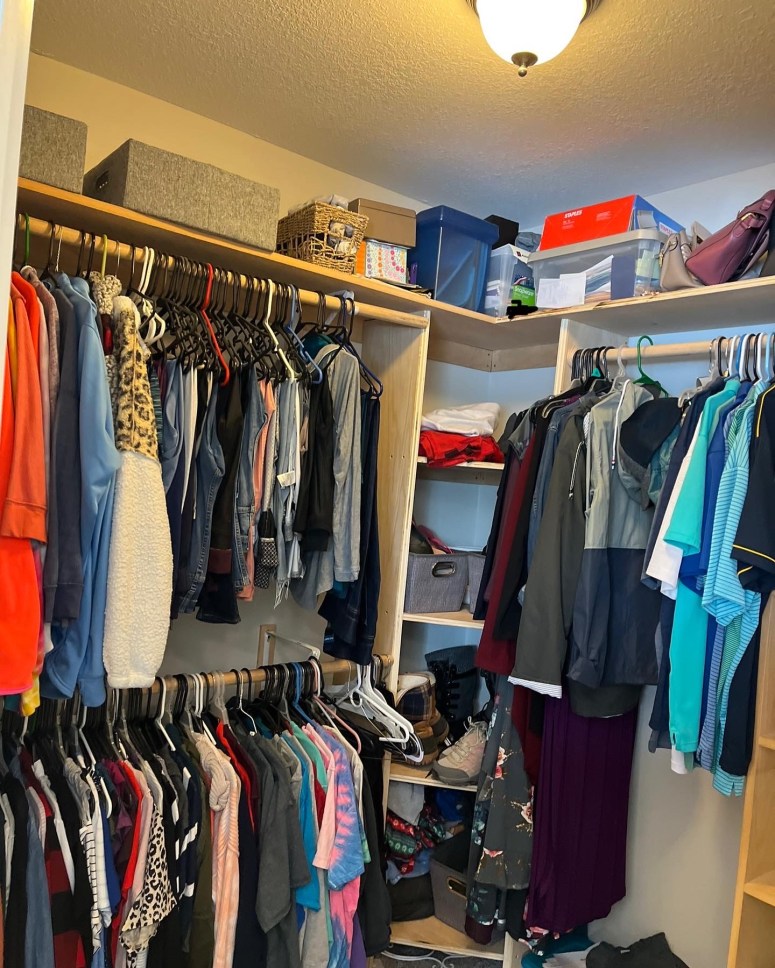
By asking “can I live without it?“, you flip the question. Now, the burden is on the item—it has to prove its value or relevance in your life. If it can’t demonstrate that it deserves to stay, then it’s free to go! You are no longer wrestling with the decision; you’re just observing what is so clear and plain. In other words; instead of you proving why it belongs, the item has to prove why it stays. It makes decluttering easier, faster, and far less emotionally draining.
SUM Method
The second important piece is my SUM method. This, along with the magic question, takes all of the thinking out of decluttering. But more important than that, it takes the emotion out of decluttering too. The SUM method is basically a list of criteria and each item has to fit ALL THREE criteria to gain approval to stay in your home.
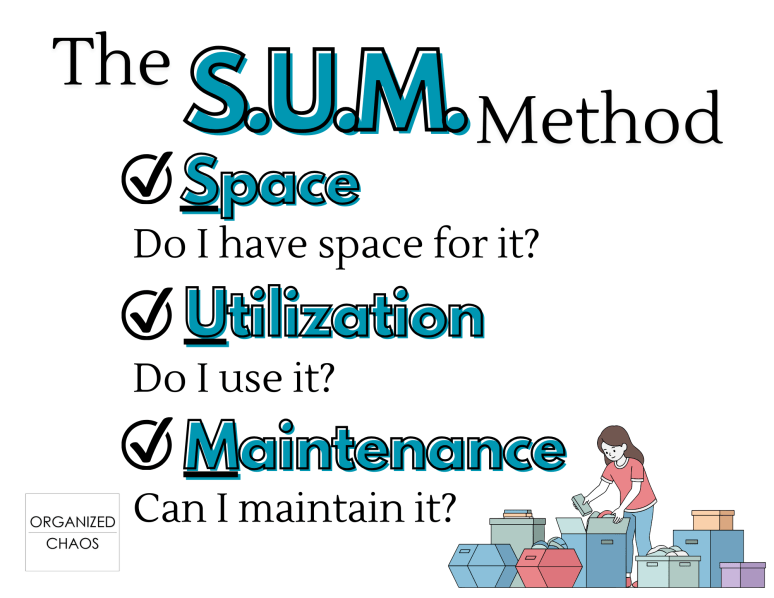
SUM Criteria:
- S is for Space.
- Do I have space for it? The item doesn’t just need to be able to fit inside your house, it needs to have a designated home. If it’s sitting on the counter because you can’t fit it in the drawer, you don’t have space for it. If you have to shove it into the cabinet and close the door quickly so it doesn’t fall out, you don’t have space for it.
- U is for Utilization.
- Do I use it? Be ruthless. If the last time you used it was three years ago, then you aren’t using it. Heck, if you aren’t using it monthly or every few months, then you aren’t using it.
- M is for Maintenance.
- Can I maintain it? Do I have the capacity to clean it, repair it, store it, keep it organized? If an item makes your maintenance mode (which is tidying and cleaning) harder, it fails the test.
Run each item in your home through the SUM criteria and if it doesn’t pass ALL THREE, you get rid of it. Even if it passes two of the three, you’re still getting rid of it!
Steps of Decluttering
1. As You Go Approach.
- The traditional way to declutter is to pull everything out. This creates peak chaos. In the beginning of a decluttering project, you are super motivated and ready to make a big change. Your eyes are bigger than your stomach, so to speak. So, you pull everything out, you start working through it all, but then between the physical labor of lugging everything out and the mental labor of having to emotionally move through your possessions…you run out of steam FAST!
- It’s all about sustainability. Sustainability is the difference between winning the battle and winning the war. Think of a crash diet. You starve yourself, lose a bunch of weight quickly and then you gain it all right back and then some because it wasn’t sustainable. The As You Go Approach is designed to bypass burn out. It’s realistic. You can stick with it.
- You declutter as you go. As you move throughout your day and you come across something you aren’t using you toss it in a basket or bin centralized in your home. The Chuck It Bucket. When the bucket is full, take it to the donation center.
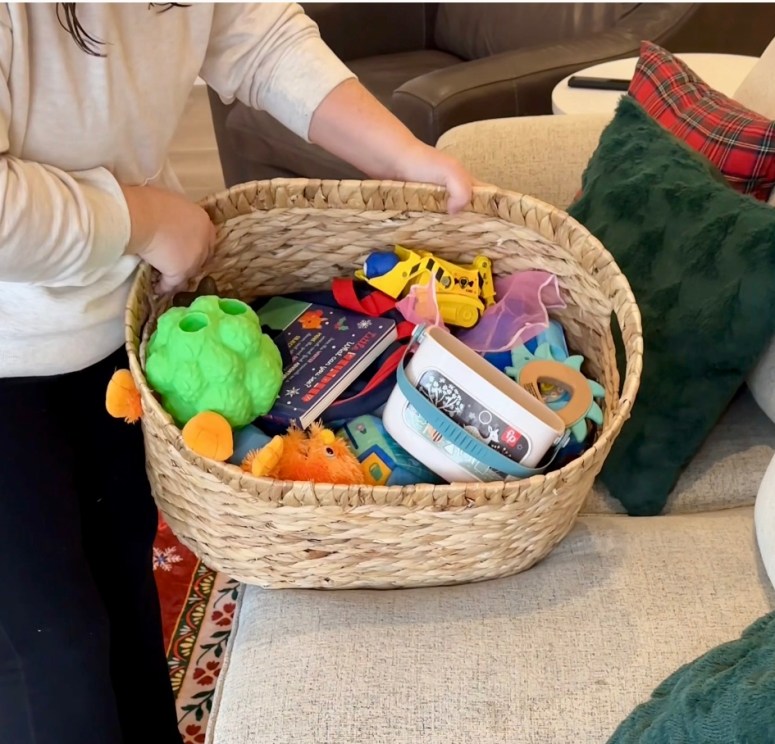
2. Micro Purge
- This is for the times when you want to pencil in time to declutter.
- Grab a box and set a timer for 10 or 15 minutes. Pick a drawer or cabinet.
- Follow the SUM method and magic question and start tossing items in. You’re not pulling everything out!
- Once you’ve done this with a drawer or cabinet and put things in the Chuck It Bucket, then you can pull the remaining items out and organize the leftovers.
- With the Micro Purge you can still make an impact quickly, but this way it’s…and here’s that word again, sustainable.
Don’t Focus on Being “Done”
Think of it like a runner in a marathon. They aren’t only focused on the finish line. They are focused on one foot in front of the other. If you fixate on the finish line, you will get overwhelmed, burnt out, anxious, and you’ll most likely quit before you even start.
Decluttering Is Never Complete
It’s important to remember that decluttering never ends. It’s never complete. As long as you are living, consuming, and interacting with the world; clutter will keep happening. Accepting that makes life so much easier. Just like a house will always need tidied, laundry will always need doing, clutter will continue entering your home.
If you have a lot of excess then major decluttering is a project, but once you’re finished, maintenance decluttering will become a habit and not a project. If you think of decluttering as a destination, you will always be frustrated. So, just remember one thing in, one thing out. If you are living in lots of excess then turn that into one thing in, two things out. By living that way every day, mathematically, you will end up on top!
 Organized Chaos
One thought on “Beginners Guide to Decluttering”