
If you’ve ever spent time setting up systems in your home—routines, chore charts, cleaning schedules—only to feel like you’re the only one actually following them, then this article is for you! I’ve included a FREE PDF below for your reference, as well!
I get lots of requests for this topic, so I want to talk about the dynamics of getting your spouse and/or your kids to help with housework, why it actually matters way more than we think, and how to get everyone on board without nagging, fighting or burning out.
We’re going to break this topic up into several sections so bear with me. We’ll cover the why. Why this issue is so important to houses. We’ll talk systems. What systems do you need to set up? What systems are overkill for your house? We’ll look at spouses and children. What motivates them, what causes them to not pull their weight, how you remedy this, and more.
- The Why Behind the Why
- WHY Don’t They Help?!
- Most People Aren’t Refusing to Help
- Households Are a Shared Environment
- How Do We Let Our Family Know How We Feel?
- Ownership and Language Matter
- Don’t Do It For Them!
- Don’t Complicate Things
- A Step-By-Step Instruction Manual for both spouses and kids is included in the PDF below!
The Why Behind the Why
Behavior is almost always the symptom, not the root case. So, why do you need to focus on the why? Understanding why someone behaves the way they do allows you to shift from judgement to empathy. Once you understand why, you are less likely to label someone as rude or lazy or selfish.
Second, it leads to better solutions. If you don’t understand the true motive for someone’s behavior, you don’t properly treat the problem. You most likely find temporary fixes as opposed to lasting change.
Last, it improves relationships and communication. When you understand why someone reacts the way they do, you can respond appropriately. People won’t feel attacked, which lowers their defenses and allows them to hear you openly.
WHY Don’t They Help?!
Why do spouses and children typically not help and how you combat these:
- If you grew up in an environment where tasks were assigned to you instead of owned by you or if you grew up in a house where someone, like a parent, did everything; then you learn that housework is reactive, not proactive. Reactive meaning you respond to problems after they occur. Proactive means you act before a situation becomes a crisis. If you grew up in a house where you’re being asked to do something then you are probably a reactive person because that’s how you were taught. I have another article Proactive vs Reactive Cleaning that better explains this.
- How do you combat this? Stop assigning tasks like they are favors. So instead of asking “can you help with the dishes?” Assign the task.
- Mental load is learned, it’s not intuitive. It’s not like you are born with the ability. Noticing what needs done is a skill. If one spouse has always carried the load of planning, tracking, anticipating; the other person has never had to build that muscle so to speak. So while one person is constantly improving the skill of handling the mental load, the other person is making almost no progress.
- How do you combat this? People genuinely don’t see what they’ve never had to scan for. So bring the mental load from internal to external. Write lists, routines, checklists. Then step back! Do not monitor. We learn from failure. So, if you’ve given groceries to your husband as his responsibility and then one week you run out of paper towels, that’s fine. He’s learning.
- Power dynamics and comfort become default. It’s human nature. We don’t notice what we’re not responsible for.
- How do you combat this? Again, let failure happen. Let something not get gone or tolerate the mess or the delay. Resist the urge to swoop in and fix everything.
- It could possibly be due to a fear of doing it wrong. If someone is constantly being criticized, or if the goal is unclear, people stop helping.
- How do you combat this? Redefine “good enough”. Let them have their way of doing things. Silence after they act is more powerful than feedback….so zip it!
- Gratitude for effort vs expectation of contribution. This one is hard because people want to feel appreciated. But if you are praising someone for helping then it reinforces that the task isn’t theirs and they don’t have to do it. I’m all for being grateful to someone. I thank my husband everyday. I don’t thank him for individual tasks, but rather for overall or big scale contributions.
- How do you combat this? Shift praise to acknowledgement. Instead of “thanks for helping with the kids”, say “I appreciate you handling bedtime—that’s your thing and it’s so helpful to our family.”
- Emotional jabs. Sometimes people act passive aggressively due to resentment or feeling unappreciated. So they might withhold responsibility around the house as a way of acting out.
- How do you combat this? Separate emotion from logistics.
Most People Aren’t Refusing to Help
They are behaving the way the system they’ve been living in has taught them. So we need to fix that!
Rarely do systems fail, typically it’s that people disengage from them. If one person in the household is doing all of the mental load, all of the planning, all of the upkeep; eventually that system collapses. Not because it was bad, but because it was never meant to be on one person.
Households Are a Shared Environment
Everyone contributes to the mess, so everyone needs to contribute to maintaining it. This isn’t about control or perfection—it’s about sustainability. (You guys know I love that word!) Sustainability is all about creating lasting systems and plans that don’t cause burnout.
For kids especially, helping at home isn’t just about chores. It teaches responsibility, teamwork, confidence, and the understanding that home life doesn’t magically run itself. For a spouse, doing their part at home isn’t to help you out, it’s to help carry their weight and steer their half of the ship.

How Do We Let Our Family Know How We Feel?
Do they read our minds? Do they pick up on our body language? NO! We have to communicate! It’s never, “well they should know how I feel”. Make it, “now we both understand”.
Needs are only able to be met once we establish the need to everyone! No guessing, no passive aggressive hints.
Conflict is inevitable. My husband and I have been together since we were 14. We grew up together. We’re best friends and we STILL have conflict. We all do. Hello! No one is perfect! Conflict happens, but communication determines whether conflicts become a wedge or a bridge. And in my marriage, it has been both. The ability to keep talking is what keeps a relationship healthy for years and years.
Frame this as a shared goal: less stress, more peace, more time together. Be specific. Don’t say “help more”. Say “can you own the dishes every night?” or “can you handle laundry on the weekends?”
Ownership and Language Matter
Now this is VERY important. Helping occasionally is different from being responsible. Helping implies that the task belongs to someone else or that participation is optional or that gratitude is expected for doing it. Owning something means you’re responsible without being asked.
So when you discuss everyone pulling their weight, do not say the word HELP. It is not “I need help” or “can you help me?” Because as soon as you start saying help, you are implying that the responsibility of the task itself is yours and yours alone. It’s not.
Don’t Do It For Them!
One of the biggest mistakes we make, especially if you’re the organized one, is that we just do it ourselves because it’s faster. But every time we do that, we silently teach everyone else that it isn’t their responsibility or that you will probably handle it. Then resentment builds. We feel unappreciated. And suddenly a simple load of laundry feels emotionally exhausting.
So recognize that if you want help, you have to create a space for other people to participate—even if they don’t do it exactly the way you would or even if they take longer or even if, at the beginning, there’s lots of over-explaining.
Don’t Complicate Things
Don’t implement a bunch of systems just because you’re getting everyone in the house to help. Systems I use regularly would be our unloading system. Coats go here, shoes there, mail and papers here, etc. My basket method. A very easy and vital system for the house. My Daily 6. That’s our daily cleaning routine. It’s not about deep cleaning, it’s about focusing on high impact tasks with low effort. If it’s not vital to keep your house running, ditch the system.
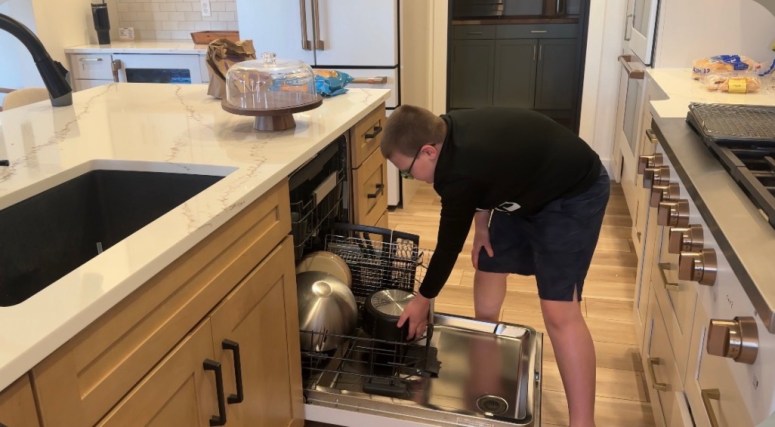
If you constantly remind, rescue, or redo then nothing will change. The system only changes when you tolerate discomfort longer than they do. It’s not toxic or resentful. It’s leadership.
Now, what if your spouse is extremely combative and unwilling? There’s a difference between resistance and inability. If they can help, but won’t that’s a relationship dynamic not a productivity problem. If you’ve had calm, supportive conversations and you’re still facing this behavior you may want to seek counseling or therapy.
This isn’t about raising perfect kids or having a spotless house. It’s about raising capable humans and protecting your own energy. You deserve support in your own home! Progress will be messy, systems will need adjusting, but the goal is consistency—not control. You’re not asking for too much, you’re asking for teamwork!
 Organized Chaos