One of the biggest misconceptions people have is that you need a bigger home to have a functional home. When people look at well-organized homes, they often say, “Well, of course it works—you have the space.”
But here is the reality: It is much easier to blame the size of your home than it is to change how it functions. Most people don’t actually have a space problem; they have a stuff problem.
Whether you are in an 800-square-foot apartment or a 3,000-square-foot house, the principles of a functional home remain the same. These lessons weren’t born in a mansion—they were forged when my family of four moved into my childhood double-wide trailer after a house fire. We shared a single room, and I became a professional at managing life in close quarters.
If you want to succeed at small-space living, you need these three fundamental shifts.
1. Own Less
It sounds obvious, but you cannot organize your way out of over-consumption. Living in a smaller space requires a trade-off: you simply cannot own as much as someone in a larger home. Owning “more” is a luxury that requires square footage you may not have.
To help you decide what stays and what goes, use my S.U.M. Method:
- S – Space: Do you have an actual, specific home for the object? Not “somewhere in that drawer,” but a dedicated spot. If you have to cram it in, or if it only fits when other items are in the dishwasher, you don’t have space for it.
- U – Use: Are you actually using it? Whether it’s weekly, monthly, or annually—be honest. Infrequent items are the first on the chopping block.
- M – Maintain: Can you keep it picked up, dusted, and cleaned? If an item adds more stress than value, it doesn’t belong in your home.
Pro-Tip: Follow the “One In, One Out” rule. For every new item you bring home, one must leave. If you are really struggling with clutter, try “One In, Two Out” until the space feels breathable.
2. Get Creative with Storage
When square footage is limited, you have to make every inch work double duty.
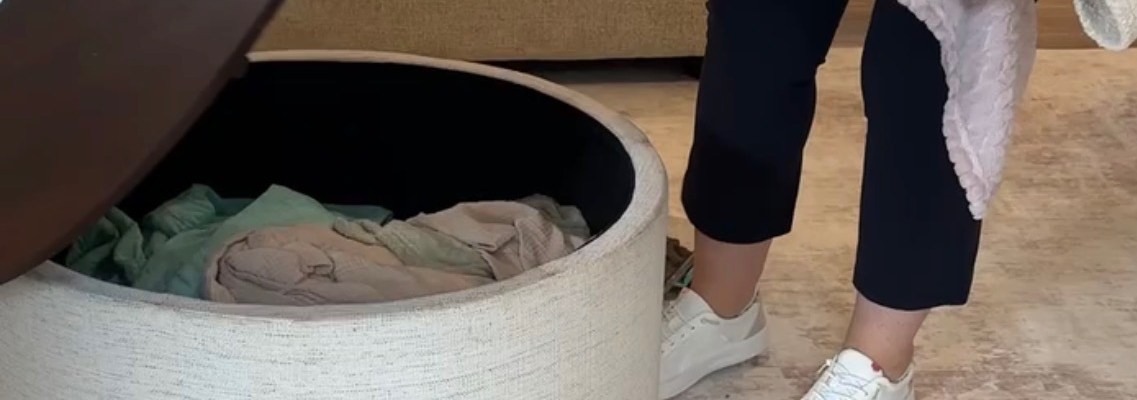
- Multipurpose Furniture: Look for ottomans with hidden storage, or couches that pull out into beds.
- Travel Organizers: These aren’t just for suitcases! Use toiletry, jewelry, and cord organizers to keep small items contained in bathrooms or closets. They create artificial boundaries that limit how much you can own.
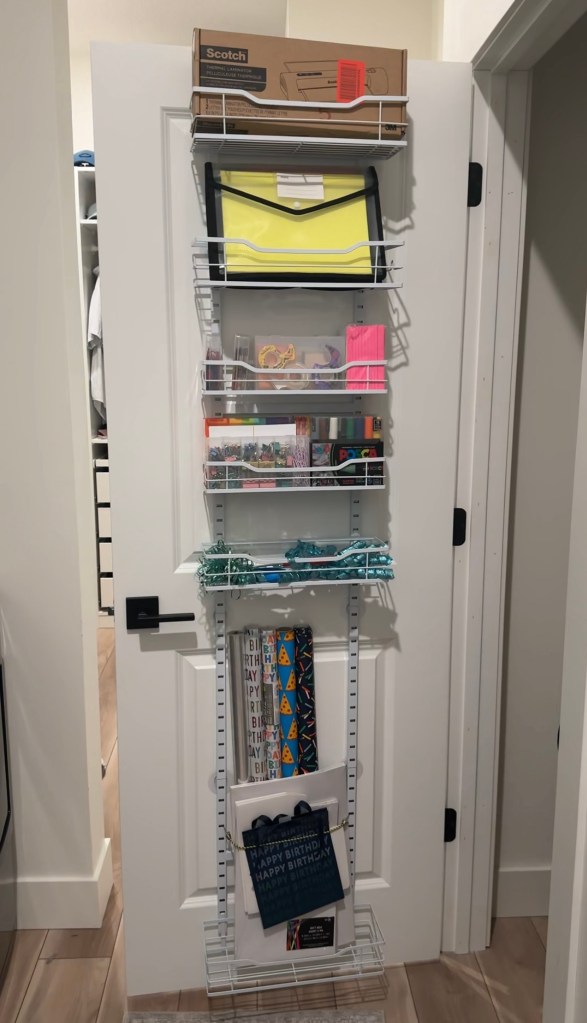
- Use Every Dimension: Don’t forget the space under the bed, the vertical space on the walls, and the backs of your doors.
3. Change Your Behavior: Live Smaller
To live in a small space, you have to actually live smaller. You cannot live like you have unlimited room. This means being selective about your lifestyle.
- Hobby Management: You might not be able to have five different hobbies that require bulky equipment all at once.
- Simple Cooking: In a tiny kitchen, focus on simple meals with fewer ingredients to avoid a countertop cluttered with appliance and prep bowls.
- Seasonal Priorities: Decide what matters most in this season of your life and give your limited space to that.
The Silver Lining
In a small space, everything competes for your room, time, and energy. When you try to do it all, the home feels overwhelming. But when you finally let go of the excess, something amazing happens: Life gets simpler.
You clean faster, you make decisions quicker, and you have more time to ficus on what actually matters. Stop holding onto things you don’t need and stop overcomplicating your routines. It’s time to start building a home that works for you—no matter the square footage.


Terrific comment. Esp. about managing hobbies. Really, you can live with hobbies that are only modestly space-consuming. It’s not that bad!
LikeLike