Meal planning looks simple from the outside — a quick 30-minute dinner, a stocked fridge, a grocery list that magically appears. But anyone who manages a household knows the truth: “What our family sees as a 30-minute dinner is just like the end of a very long chain.”
Over the years, I’ve heard every comment imaginable:
- “Why do you need a binder to figure out dinner?”
- “Why can’t we just decided what to eat when we’re hungry?”
- “You’re making this too complicated.”
But the reality is this: running a kitchen well is complicated — and it deserves respect. Meal planning is a system, not a spur-of-the-moment decision. And that system is exactly how our family of five consistently spends just $20-30 a week on groceries for meals.
This article walks you through the heart of that system: my Mini Menu Binder — what it is, how it works, and how it can simplify your own meal planning.
Why a Mini Menu Binder?
The binder is my portable command center. It keeps everything in one place so I’m not digging through texts, old notes, or mental clutter. I now have meal planning down to a science and here is how.
Inside the binder, I keep:
- A list of every meal our family likes
- Recipes (for me or anyone else who jumps in to cook)
- Weekly menus
- Inventory lists from my fridge, freezer, and pantry
- A pen, cards, cash, and zipper inserts for coupons or loose items
It’s compact enough to toss in my bag and plan on the go — in the car, on the way to church, or while waiting at kids’ activities.
Link for my mini menu binder > https://www.amazon.com/shop/organizedchaos4/list/96AZB935OKRV?ref_=aipsflist&tag=audreybarton-20
Step 1: Build Your Master Meal List
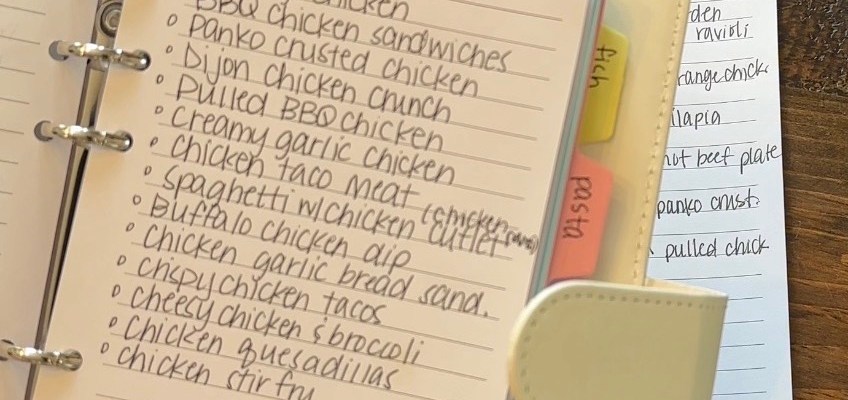
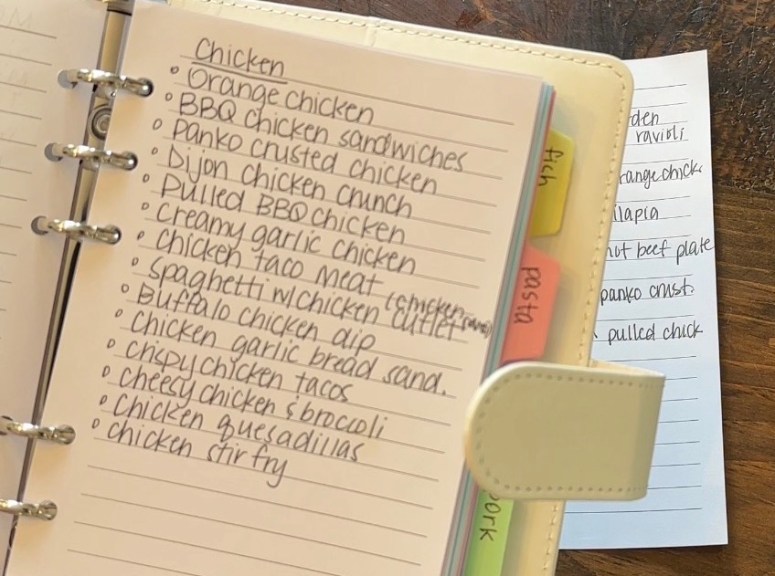
This is the foundation. It’s a running list of every meal your family likes and that you make regularly. When life gets busy, it’s easy to forget dishes you haven’t made in a while. The list removes the mental load.
I organize mine by: chicken, beef, pork, pasta, fish, and no-protein meals. This makes choosing weekly meals fast and stress-free.
Step 2: Keep Recipes Handy (Even If You Don’t Use Them)
I rarely cook from recipes, but I keep them in the binder for when other people jump in to help cook or I need a refresher. They live in the back section, organized by meal type.
Step 3: Shop Your Inventory First
This is the secret to spending $20-30 a week on meals.
Before planning meals I walk through the fridge, the freezer, and the pantry. I write down everything that needs to be used soon — especially items close to expiration.
This prevents waste and forces creativity. It also turns grocery shopping into a game: How much can I make from what I already have?
Step 4: Build Meals From What You Already Have
Once the inventory list is done, I brainstorm meals using those ingredients.
Here are some examples from a weekly meal plan I did with things I already had:
- Crunching up croutons to make breadcrumbs for baked chicken
- Creamy garlic chicken using freezer sauce and green beans
- Crispy chicken tacos using leftover taco chicken
- Cheesy chicken, broccoli, and rice
- Simple sides using carrots, lettuce, or green beans
Some weeks are easy because the pantry is full. Other weeks require more creativity. But the binder keeps the process structured.
Step 5: Match Meals to Your Schedule
This is where the binder meets real life.
You look at your calendar and plan meals around:
- Ball games
- Bible study
- Busy evenings
- Nights when you have more time to cook
Quick meals go on busy nights. More involved meals go on slower nights.
Step 6: Keep It Portable
The binder doubles as a wallet. With zipper inserts, card slots, and a pen holder, it’s easy to grab and go.
This makes meal planning possible in those small pockets of time — in the car, waiting for kids, or during errands.
Step 7: Store It Where You’ll Use It
I keep my binder in a basket on the counter with chargers, notepads, etc. It becomes a little home-base station for planning, charging, and organizing.

Link for my storage basket > https://amzn.to/4hK3K5I
Why This System Works
The Mini Menu Binder:
- Removes decision fatigue
- Keeps everything in one place
- Prevents food waste
- Saves money
- Makes planning portable
- Simplifies weekly routines
- Helps you stay consistent even during chaotic weeks
No two weeks look the same — but the binder keeps the process steady.

