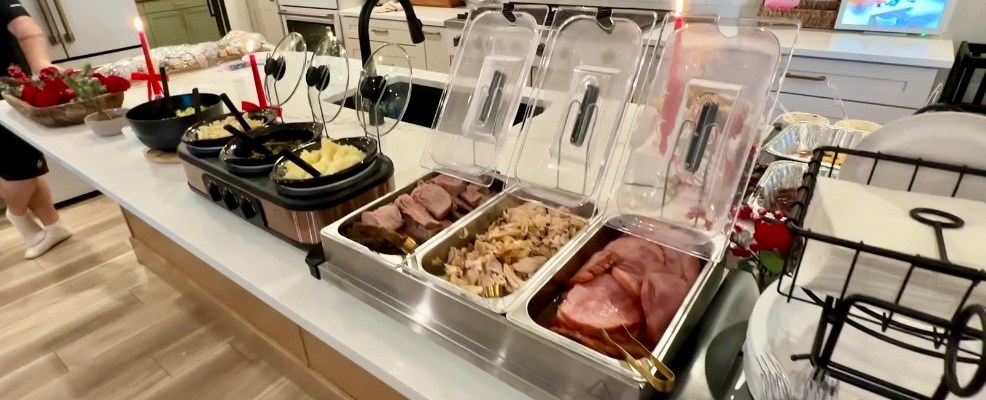
Merry Christmas! Just kidding. It’s only the beginning of November, but we’re already talking about Christmas dinner!
Whether you’re hosting Thanksgiving, Christmas, a birthday party, or just having family over for dinner, the process is pretty much the same.
I have a system I follow every single time I host, and it makes a HUGE difference. The goal is to have delicious food, everything ready on time, and a relaxed atmosphere where you can actually enjoy the people who came to visit.
You don’t need a picture-perfect house, fancy serving dishes, or an entire week of running around like crazy.
You just need a little planning and preparation.
So grab a notepad and pen because I’m going to walk you through exactly how I prepare for hosting a holiday dinner!
1. Start Two Weeks Before: Clean the House
I know two weeks sounds like overkill, but trust me!
If you’re planning on doing any deep cleaning before your gathering, this is when you want to do it.
Clean the baseboards, deep clean the kitchen, or tackle whatever larger cleaning projects you feel are necessary.
The one thing I don’t want you doing is starting these projects the week of your gathering.
Please don’t start organizing drawers, wiping down cabinets, or creating bigger messes for yourself when you should be focusing on preparing for your event.
Get those bigger projects done two weeks ahead of time. The week of your gathering should be about maintaining your home, not transforming it.
And I want to make something clear: I am not trying to provide my guests with a picture-perfect home.
Over the years, especially as I’ve grown in my faith, I’ve realized that isn’t what hosting is about.
My baseboards might be dusty. My floors might need mopping. There might be fingerprints on the windows.
My house is tidy and comfortable, and that’s enough.
I don’t even bother mopping right before everyone comes over because I know the floors will get dirty anyway. I’ll mop afterward!
I think sometimes we put so much pressure on ourselves to make our homes look perfect for company that we lose sight of why we’re having people over in the first place.
Your guests are coming to spend time with you, not inspect your baseboards.
2. One Week Before: Plan Your Menu
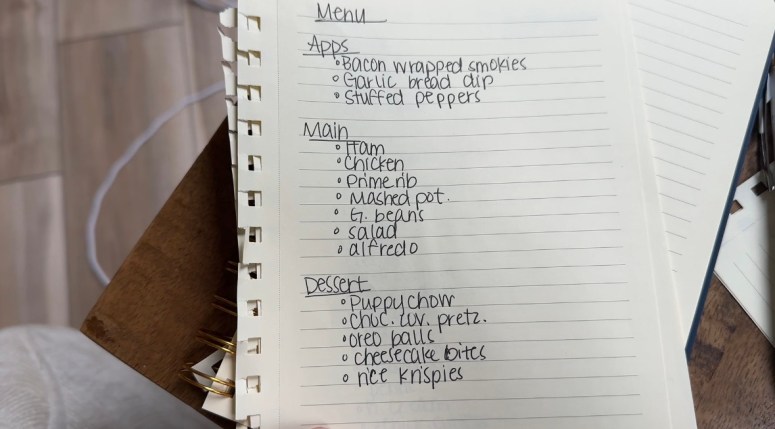
About a week before your gathering, it’s time to figure out your menu.
I like to plan my menu around the season. Winter gatherings usually call for heavier, warmer foods, while summer gatherings might include lighter meals and cold dishes.
For Christmas dinner, I’m going with more traditional holiday foods.
Once I’ve decided on my menu, I break everything down into categories:
- Appetizers
- Main dishes
- Sides
- Desserts
Once I’m comfortable with the menu, I move on to one of the most important parts of my planning process.
3. Make an Expanded Grocery List
This is where I get very specific!
Instead of simply writing down the names of my dishes, I break every recipe down into its smallest details.
For example, if I’m making bacon-wrapped Smokies, my grocery list will include:
- Smokies
- Bacon
- Brown sugar
- Foil pan
I’m listing absolutely everything I need to complete that dish.
I do this for every single item on my menu.
If I’m using bacon in multiple recipes, I’ll make a note that I need two packages. If I need onions for three different dishes, I’ll tally those up, too.
The idea is to get everything out of your head and onto paper.
Once I’ve gone through every dish, I have one complete grocery list. No guessing, no realizing halfway through cooking that I’m missing an ingredient, and no unnecessary trips to the store.
4. Do Two Separate Grocery Runs
I like to split my grocery shopping into two trips.
Grocery run #1: About four days before
This trip is for everything that isn’t perishable.
If it can sit in the pantry or refrigerator for a week without a problem, I’m buying it now.
Grocery run #2: About two days before
This trip is for all the fresh and perishable ingredients.
Think fresh parsley, fruit, vegetables, and anything else that needs to be as fresh as possible.
I like doing two separate trips because things get hectic when you’re trying to manage a huge influx of groceries all at once.
It also gives me time to organize everything before the actual cooking begins.
5. Organize Your Groceries by Dish
When I bring everything home, I don’t just throw it all into the pantry and refrigerator.
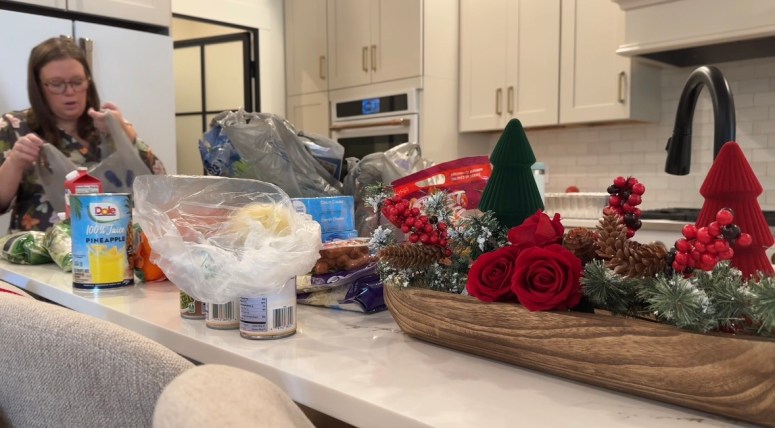
I organize my ingredients by the dish they’re going into.
If I’m making a particular casserole, I’ll keep the ingredients for that casserole together. If I’m making an appetizer, I’ll group all of those ingredients together.
I do the same thing with items that can stay on the counter or in the pantry.
Yes, my kitchen might look like a little prep kitchen leading up to the event, and I’m completely okay with that!
Having everything grouped together makes cooking so much easier because I’m not digging through the refrigerator trying to remember where I put something.
Everything has a place, and everything is ready when I need it.
6. Do 80% of Your Cooking the Day Before
This is probably one of the biggest secrets to having a stress-free hosting day.
Anything I can prepare ahead of time without losing its taste or structural integrity, I’m doing the day before.
Think macaroni and cheese, mashed potatoes, casseroles, and other dishes that can be made ahead and reheated.
But don’t stop at preparing entire dishes. You can prepare individual ingredients, too.
For example, I like to add caramelized onions and bacon to my green beans.
Instead of doing all of that on the day of the event, I’ll cook my bacon and caramelize my onions the day before. I’ll store them in separate containers.
Then, when it’s time to prepare the green beans, all I have to do is warm everything up and assemble the dish.
The same goes for appetizers.
I can assemble my bacon-wrapped Smokies ahead of time without cooking them. I can prepare stuffed peppers and have them ready to go in the refrigerator.
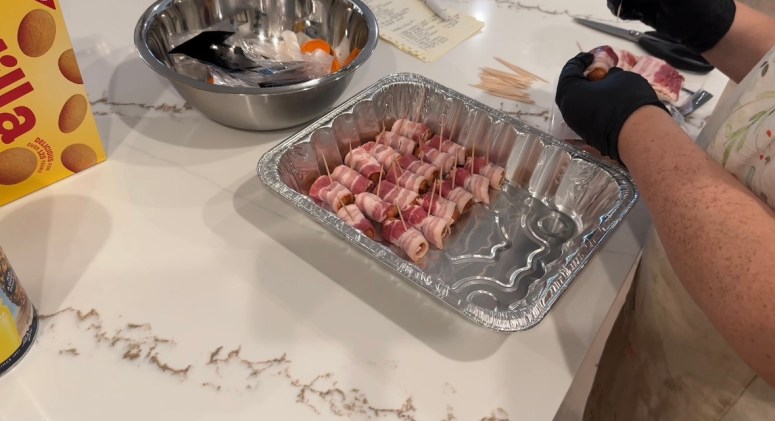
Think through every single dish and ask yourself:
What can I do ahead of time?
The more you can accomplish the day before, the less you have to worry about on the actual day.
It also means fewer dirty dishes to deal with while you’re trying to get everything served.
My goal is to start the day with a clean kitchen, an empty dishwasher, and as much food already prepared as possible.
7. Make a Schedule for the Day Before and the Day Of
This is another step I absolutely do not skip.
Once I have my menu figured out, I make a separate schedule for all the preparation and cooking.
I’ll have a list for:
- Two days before
- The day before
- The morning of
- Right before guests arrive
- Serving time
I look at every item on my menu and decide exactly when it needs to be prepared.
Some things can be made the day before. Others need to be cooked that morning. Some things need to go into the oven right before dinner.
I write it all down.
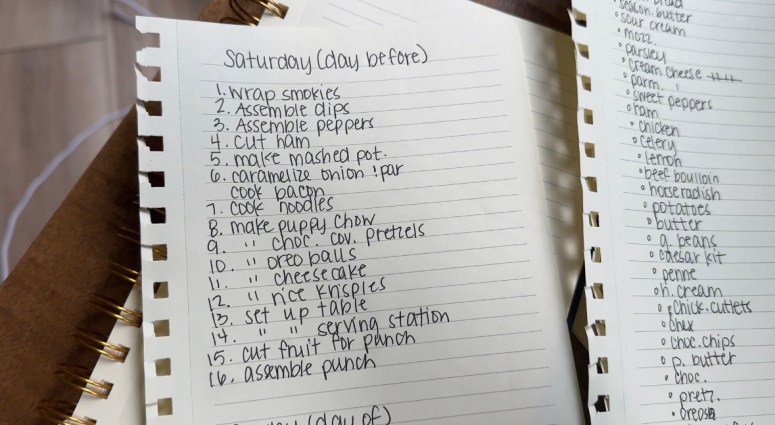
And when I say I hold onto these lists for dear life, I mean it!
When I’m hosting, there is so much going on. You’re still living your normal life, taking care of your family, and managing everything else that needs to happen.
My brain cannot keep track of all those little details.
I don’t want to rely on remembering everything. I want to be able to look at my list, see the next task, complete it, and cross it off.
When Luke helps me, he uses the same list. He can see what’s already been done and what still needs to be finished.
It makes everything so much easier because we’re both working from the same plan.
And please don’t think you’re overplanning by doing this. Having a schedule is what allows you to relax!
The goal is to remove stress, not create more of it. If your planning process becomes more stressful than the actual gathering, simplify it.
8. Use Mise en Place in Your Kitchen
If you’ve followed me for a while, you’ve probably heard me talk about mise en place.
It’s a French term that means “everything in its place.” It’s a concept used in professional kitchens, and it’s something I think everyone should incorporate when preparing a large meal.
The idea is that everything has a designated place and purpose. Your kitchen shouldn’t be a random collection of ingredients, dirty dishes, and cooking utensils scattered everywhere.
Here are a few things I do:
- Keep ingredients grouped together by dish.
- Put dirty utensils directly into the dishwasher when I’m finished using them.
- Rinse bowls and dishes as I go.
- Wipe down the counter between tasks.
- Keep a trash bowl on the counter so I’m not constantly walking back and forth to the trash can.
These little habits make a HUGE difference.
Instead of finishing one recipe and leaving a disaster behind, I’m constantly resetting my workspace as I go.
Remember, the goal is to start the actual day of your gathering with as little cleanup and preparation left as possible.
9. Don’t Make More Work for Yourself With Fancy Serving Dishes
This is a personal preference, but I like to keep things simple.
If I’m hosting more than eight people, I’m probably using disposable foil pans. Honestly, I might use them for smaller gatherings, too!
I want to make delicious food and serve it at the right temperature. I don’t necessarily need beautiful serving bowls, fancy gravy boats, or matching dishes.
There’s nothing wrong with using those things if you enjoy them!
But you need to decide what’s important to you.
If having beautiful serving dishes is something you love, go for it. Just remember that those dishes also need to be cleaned and put away after everyone leaves.
For me, I would rather minimize the cleanup so I can relax after the gathering.
I want to enjoy my guests, enjoy the meal, and not spend the rest of the evening washing a mountain of serving dishes.
There’s no right or wrong way to do it. Just make sure you’re not creating extra work for yourself unnecessarily.
10. Stage Your Serving Area Ahead of Time
One thing you don’t want to be doing while your guests are arriving is figuring out where everything is going to go.
Before the event, I like to set up my serving areas.
Think through the entire process:
- Where will guests grab their plates?
- Where will the appetizers go?
- Where will the main dishes and sides be served?
- Where will the desserts go?
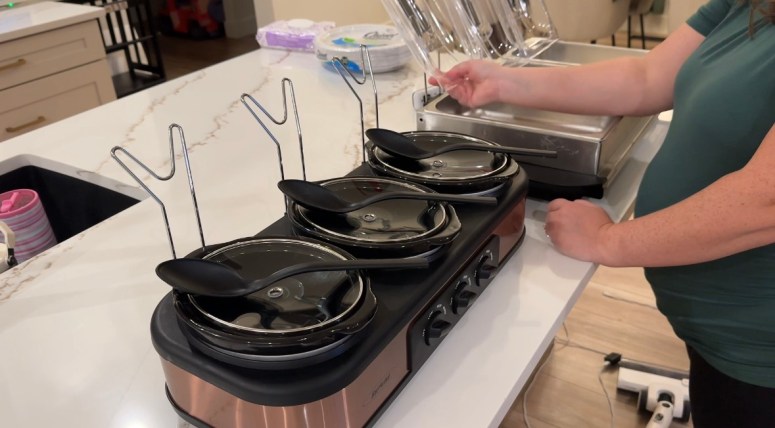
- Where do you need outlets for crockpots or warming equipment?
- How will you keep everything warm?
I like using warming mats and heated serving pans to help keep food at the right temperature.
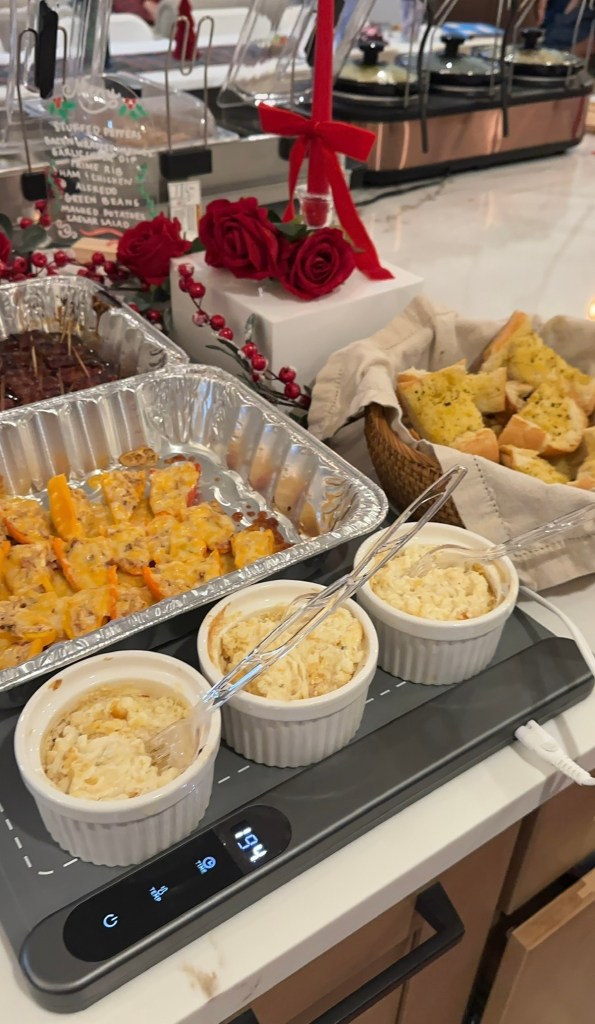
I also lay out all of the serving spoons and utensils ahead of time.
Think about the flow of your serving area. You don’t want guests trying to grab plates in one spot while someone is reaching across them to get to the food.
A little staging ahead of time makes serving so much smoother.
And more importantly, it means you aren’t running around trying to figure everything out while everyone else is ready to eat!
My Holiday Hosting Checklist
If you take nothing else away from this article, remember these things:
- Two weeks before: Finish any deep cleaning or larger household projects.
- One week before: Plan your menu and make your expanded grocery list.
- Four days before: Shop for nonperishable groceries.
- Two days before: Shop for fresh and perishable ingredients.
- The day before: Prepare as much food as possible, assemble appetizers, and finish individual ingredients.
- The day before: Organize your serving areas and make sure you have everything you need.
- The morning of: Follow your written schedule and finish the remaining cooking.
- Before guests arrive: Make sure appetizers are ready, food is warming, and your serving area is staged.
Remember, Hosting Doesn’t Have to Be Perfect
I think we put so much pressure on ourselves when it comes to hosting.
We want the perfect house, the perfect decorations, the perfect presentation, and the perfect meal.
But that’s not really the point, is it?
My goal when hosting is to have delicious food, everything ready at the same time, a comfortable home, and a relaxed atmosphere.
I want to be able to greet my guests properly, sit down and enjoy the meal, and actually spend time with the people who came to visit.
I don’t want my mind running through a million different things because I forgot to plan ahead.
That’s why I rely so heavily on lists, schedules, preparation, and keeping my kitchen organized.
A little work ahead of time makes a world of difference when the big day arrives.
Whether you’re hosting Thanksgiving, Christmas, a birthday party, or just a simple dinner with family, I hope these tips help make your next gathering a little easier.
I pray your holiday season is stress-free, enjoyable, and full of joy and fellowship.
Link to all of my Holiday Serving Supplies > https://amzlink.to/az0fkK1U1gbV7

