
Planning content usually involves color-coding, rigid schedules, and productivity hacks. This is not that. In fact, this might be the least traditional planning method you’ll ever hear — and that’s exactly why it works.
This is how I map out my week with no toxic productivity, no rigid systems, and no friction. Just a simple, low-maintenance anti-plan that keeps the chaos at bay.
Why I Stopped Over-Planning
Over the years, I’ve simplified everything. The more complicated a system is, the more friction it creates — and the less likely we are to stick with it. I learned this the hard way.
When my husband and I worked multiple jobs outside the home, our planning was meticulous. Color-coded calendars, detailed schedules, reminders for every tiny thing. It worked for that season, but it was also a lot.
Now life looks different:
- We both work from home
- We homeschool
- We have a toddler
- I’m pregnant with our fourth
- Our oldest is in public school
- Our priorities have shifted — especially in our Christian faith
Because our life changed, our planning needed to change too. We don’t run as much. We don’t over-schedule. We focus on what matters, and we leave breathing room everywhere else.
Planning should fit your season — not force you into someone else’s.
Step 1: Plan on Saturday (Not Sunday)
Your week starts on Sunday, so planning on Sunday means you’re already behind.
I plan every Saturday morning. It’s calm, quiet, and gives me a full day to get ahead before the week begins.
Step 2: Start With a Brain Dump
Every planning session begins with a brain dump — no exceptions.
I brain dump multiple times a day, especially while cleaning. If you’re like me and struggle to stay focused, this clears the mental clutter so you can actually plan.
How to brain dump:
- Grab a notebook or your phone
- Write down anything that pops into your mind
- Don’t organize — just unload
It might look like:
- Buy milk
- PTO snacks Thursday
- Soccer game Tuesday
- Call dentist
- Story time at library
If your mind goes blank, just start writing about the week ahead. Your brain will unfreeze once you get moving.
Once everything is out, organize the dump:
- Turn items into to-do lists
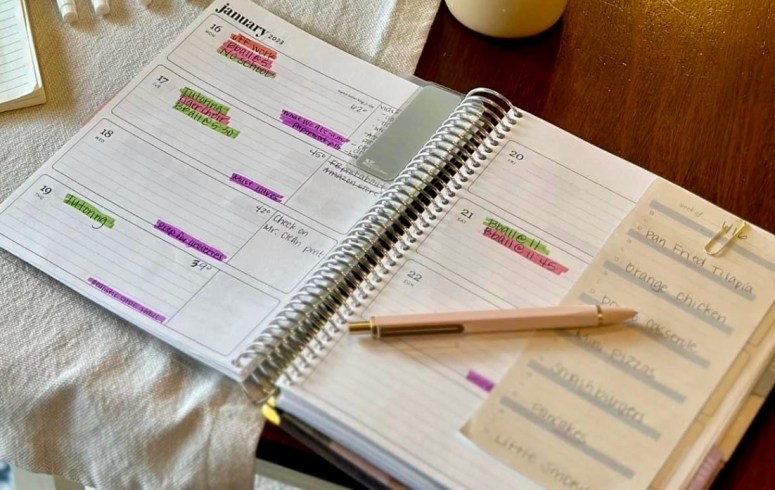
- Add dates to your calendar
- Add groceries to your order
- Toss the original brain dump
Now your mind is quiet, and your week is ready to be shaped.
Step 3: Break Your Planning Into Four Simple Categories
I keep my weekly planning extremely simple — just four sections.
1. Meal Planning
This is the most important part because food anchors the entire week.
I plan breakfast, lunch, and dinner.
I use my mini menu binder to keep everything organized.
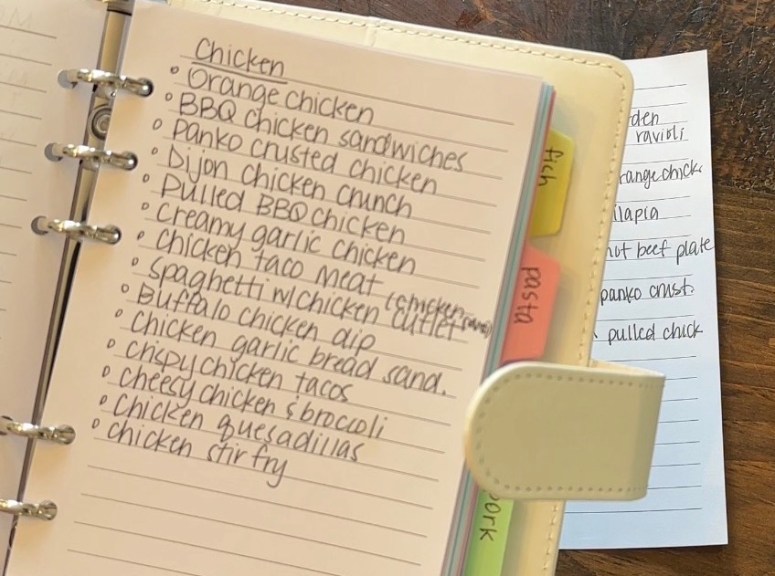
Link for my binder here > https://amzlink.to/az0GpzOgAuPzN
2. Logistics & Events
This used to be the most complicated part of my planning. Now it’s simple.
We use a shared family calendar and have a Skylight calendar in our kitchen.
You can make this as detailed as you want. If you need reminders like “Leave work at 3:30 for the game,” add them. If you need two-day reminders for school treats, add them.
I personally keep it minimal: events on the day they happen, and mental notes for the rest.
3. Homeschool & Work
Because we homeschool and work from home, we create our own schedule.
On Saturday, I:
- Prep schoolwork for the week
- Clip assignments together
- Make notes for whoever is teaching that day
- Plan my content schedule
- Outline what needs filmed, posted, or written
This keeps the week smooth and predictable.
4. Home Maintenance & Cleaning
I follow my own cleaning system — the 6/10 List — so I don’t plan much here.
Daily tasks are memorized. Weekly tasks get checked on Saturdays. Every home is different, but this category keeps things from slipping through the cracks.
Step 4: Keep It As Simple As Possible
Whatever system you create, you have to be able to follow it. The more detailed it is, the harder it becomes.
I’ve learned that:
- My anxiety is better when I don’t over-plan
- My brain can’t hold a million details
- I need breathing room
- I function best with minimal structure
My husband can hold more in his head. I can’t. So I don’t force it.
If someone asks me about an event next week, I’ll say, “Ask me Tuesday.” I don’t need to carry everything at once — that’s what the calendar is for.
The Heart of the Anti-Plan
This system works because it’s:
- Low friction
- Flexible
- Simple
- Sustainable
- Season-friendly
- Anxiety-friendly
We still show up early. We still get everything done. We just don’t overbook our lives or drown ourselves in details.
Planning should support your life — not suffocate it.

